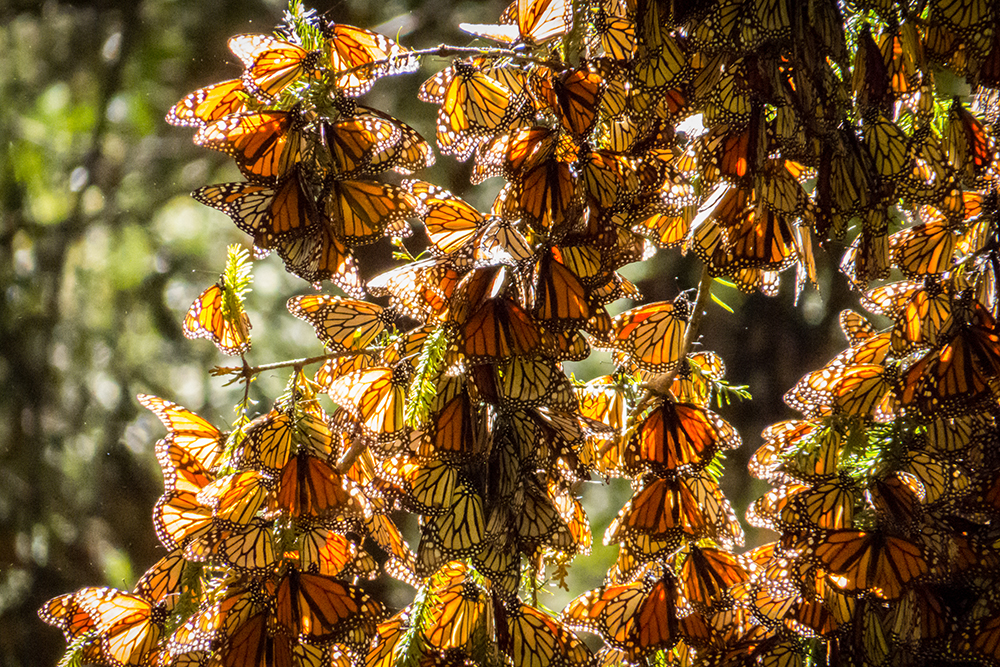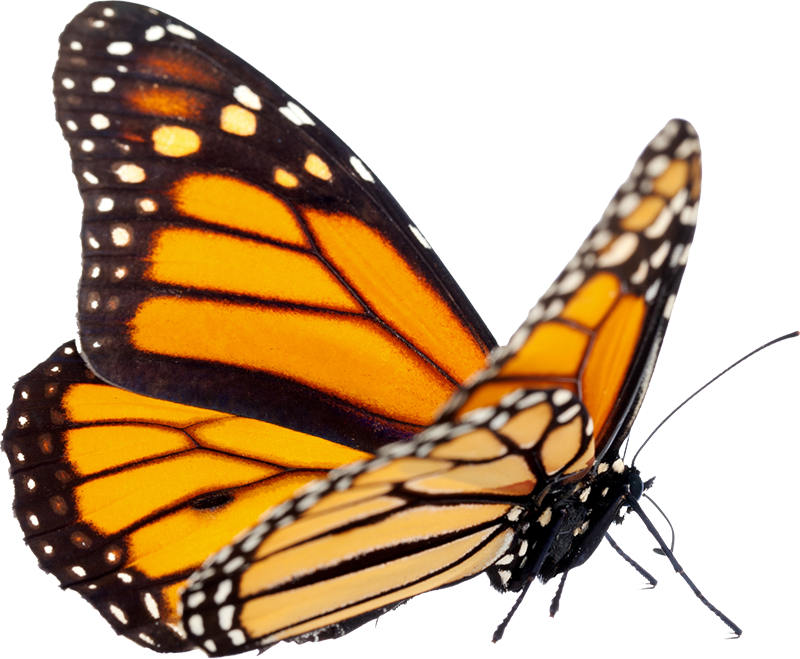
Monarch butterflies are some of the most recognizable insects in North America, known for their bright orange wings patterned with black and white. Even though they look delicate, monarchs are incredible travelers. Every year, millions of them migrate thousands of miles—from the northern United States and Canada all the way to Mexico or coastal California—to escape the cold and survive the winter. Their journey is one of the longest and most amazing migrations of any insect on Earth.
Monarchs rely on milkweed plants to survive, and changes in our environment have made their lives harder. By learning about these butterflies and the challenges they face, we can all play a part in protecting them. Whether you're a lifelong nature lover or just discovering these beautiful creatures, this site will guide you through their world and show how simple actions can help keep monarchs thriving for generations to come.
Where the Monarch Got Its Name
The monarch butterfly's name has a royal story behind it. Many believe it was named in honor of King
William III of England, whose title included “Prince of Orange”—a fitting connection to the butterfly's
bright orange wings.
Scientists have been studying and naming monarchs for centuries. The species was first described in 1758 by
Carl Linnaeus, a Swedish naturalist who created one of the earliest systems for naming living things. Over
time, different researchers placed monarchs into different scientific groups as they learned more about how
butterflies are related.
The scientific name Danaus plexippus comes from characters in ancient Greek mythology. “Danaus” refers to a
legendary king, and “Plexippus” was one of his relatives. These names were part of a tradition where early
scientists often used mythological figures when naming colorful butterflies.
Even though the naming history is full of twists and revisions, the monarch's scientific name today—Danaus
plexippus—is recognized around the world. It reflects both the butterfly's long scientific history and the
fascination it has inspired for generations.
The Monarch's Genetic Story
Scientists have learned a lot about monarch butterflies by studying their DNA. In fact, the monarch was the
first butterfly species to have its entire genome sequenced, giving researchers a detailed look at how these
insects grow, migrate, and survive.
The monarch genome contains thousands of genes that help explain important parts of its life, including how
it knows when to migrate, how its internal “clock” works, and how its body changes between summer and
migratory generations. Recent studies have also uncovered the genetic roots of the monarch's bright warning
colors and its incredible long-distance migration.
Interestingly, monarchs from eastern and western North America — even though they migrate to different
places — don't show genetic differences. Instead, the genes linked to migration are turned “on” in
butterflies that migrate and stay “off” in those that don't. This means behavior, not DNA differences,
drives whether a monarch migrates.
In 2015, researchers also discovered traces of ancient virus-related genes in the monarch genome. These came
from bracoviruses carried by parasitic wasps long ago. While this made headlines, it doesn't mean monarchs
are genetically modified — it simply reflects how species can exchange genetic material over millions of
years.
Together, these discoveries help scientists better understand how monarchs live, adapt, and respond to a
changing world — knowledge that can guide future conservation efforts.