Where Monarchs Live
Monarch butterflies live in a wide variety of places, and their range shifts throughout the year as they
breed, migrate, and overwinter. Even though eastern and western monarchs use different migration routes,
they're
genetically the same butterfly — just separated by geography, not biology.
Across the Americas, monarchs can be found from southern Canada all the way to northern South America.
They
also appear on islands and coastlines around the world, including Hawaii, the Caribbean, Australia, New
Zealand,
and parts of Europe and North Africa. In the UK, they sometimes show up as rare migrants carried by strong
winds.
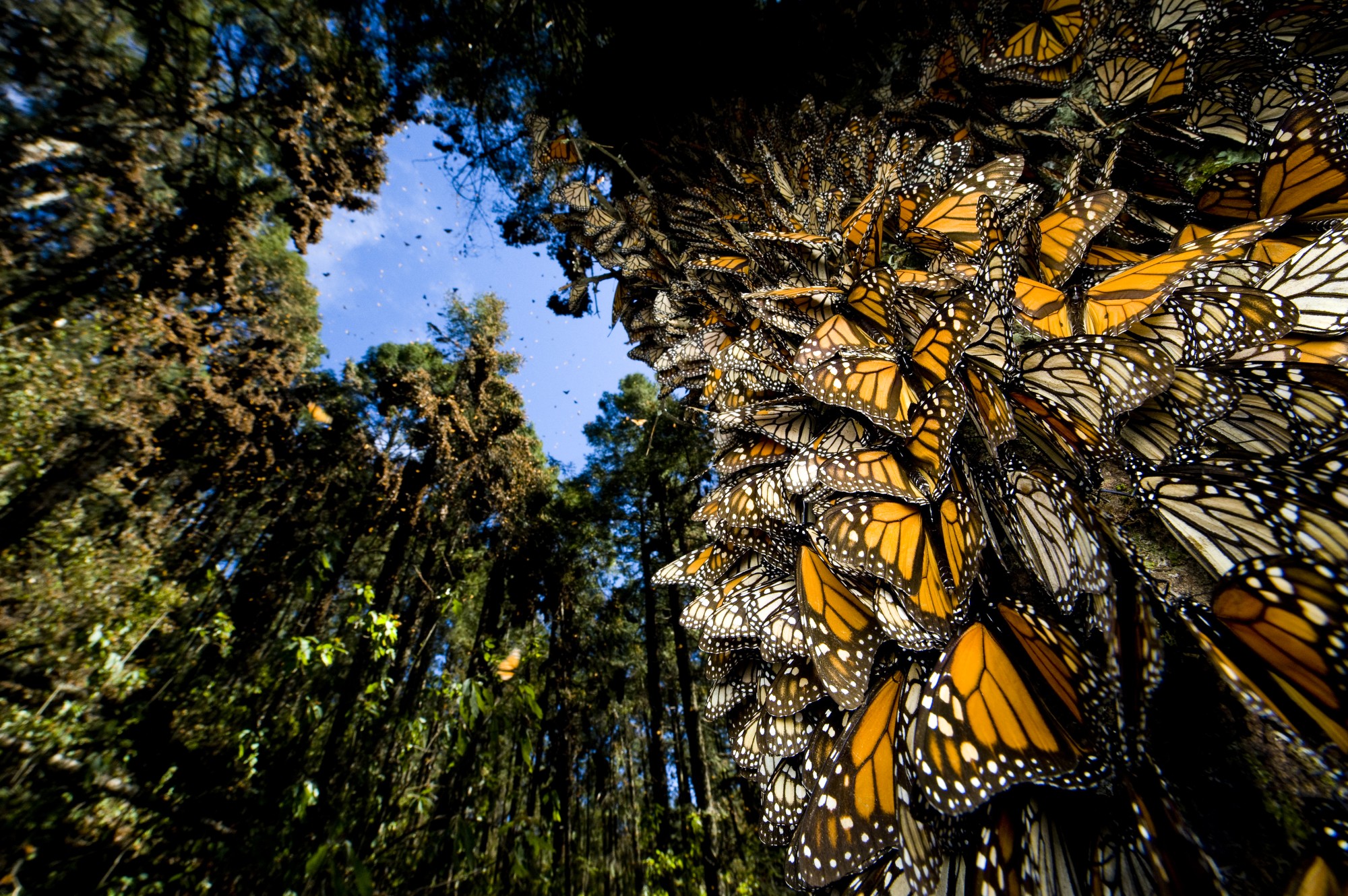
In winter, monarchs gather in specific places that offer the right mix of sunlight, shelter, and moisture.
Eastern monarchs cluster in the mountain forests of central Mexico, while western monarchs overwinter
along
the California coast. Smaller year-round or wintering groups also exist in Florida, Arizona, and along the
Gulf
Coast.
During the breeding season, monarchs use almost any open area that has milkweed — their essential host
plant.
This includes fields, prairies, pastures, gardens, parks, roadsides, and even urban neighborhoods. As long
as
milkweed is present and nectar plants are nearby, monarchs can thrive.
The Plants Monarchs Depend On
Monarchs rely on two kinds of plants: milkweed for their caterpillars and nectar flowers for the adults.
Different regions of the U.S. support different native milkweed species, but research shows that most
eastern monarchs grow up on just a few key types — especially common milkweed, green antelopehorn, and
spider milkweed. These plants provide the toxins that make monarchs distasteful to predators and help fuel
their migration.
Not all milkweeds are equally helpful. Tropical milkweed, a popular garden plant, can cause problems when
grown year-round in warm areas. It may disrupt migration and increase the spread of a harmful parasite (OE),
so conservation groups recommend planting native milkweed instead.
Adult monarchs need abundant nectar to power their long flights. They're especially drawn to sturdy,
flat-topped flowers like sunflowers, asters, coneflowers, goldenrods, gayfeathers, Joe-Pye weeds, and other
late-blooming plants in the aster family. These flowers are crucial during fall migration, while
early-blooming species help monarchs in the spring.
Monarchs also “puddle” — sipping moisture and minerals from damp soil or gravel — which helps supplement
their diet.
Together, native milkweeds and nectar-rich flowers create the habitat monarchs need to survive, migrate, and
return year after year.
The Great Monarch Migration
Monarch butterflies make one of the most remarkable migrations on Earth. Every year, millions travel
thousands of miles across North America, moving north in the spring and south in the fall. No single
butterfly completes the entire round-trip — the journey is carried out over several generations, each
picking up where the last left off.
Eastern monarchs fly all the way to the mountain forests of central Mexico to spend the winter, while
western monarchs gather along the California coast. In spring, their descendants spread back across the
United States and into Canada, following the growth of milkweed and blooming nectar plants.
Monarchs can travel more than 1,200-2,800 miles, navigating storms, predators, and habitat loss along the
way. Their flight is steady but determined, averaging about 6 mph as they ride warm air currents
southward.
Climate change and the loss of milkweed and nectar plants have made this journey harder. Warmer
temperatures, shifting seasons, and disappearing habitat disrupt migration timing and reduce the number of
monarchs able to complete the trip. Despite these challenges, the monarch migration remains one of
nature's
most inspiring spectacles — and a powerful reminder of why conservation matters.